An unverified Google Business Profile is not a local SEO campaign. You cannot reliably edit the public details, answer reviews, or treat the listing as a commercial asset until Google accepts that you manage the business. In the Philippines that step often fails for boring reasons: the postcard never reaches the unit, the email in the prompt is an unused Gmail, or the video was filmed on the wrong kind of premises. We treat verification as operations, not as a ranking trick.
Google, not an agency, decides which method you see. The official Google Business Profile Help page is the source for the current options. We do not invent a Philippines-only policy, and we do not tell you to force a method that the profile does not offer.
Why Verification Comes Before Map Work
A claimed listing that still shows Get verified is unfinished. Categories, hours, services, photos, and tracking links only matter once you can save them and keep them. If two people have been fighting over the same pin, or an old tenant left a listing in place, verification is also how ownership becomes usable.
We see businesses spend weeks on posts and photo dumps while the profile is still in a half-claimed state. That work does not stick if Google later asks you to verify again after a name or address edit. Get the proof done first, then treat Google Business Profile and local pack work as the commercial layer on top of a listing you actually control.
Verification is also the moment to freeze the public name, address, and category. Google’s mail instructions say not to edit those fields while a postcard is in transit, because the code will not work. The same caution is useful even when the method is video: do not rename the shop mid-review because the sign in the footage will no longer match the profile.
What Google Offers And What We Cannot Pick
Google states that verification methods are determined automatically and cannot be changed. The mix you see depends on business type, public information, region, or business hours. In some cases more than one method is required. If the screen shows phone, email, video, live video call, or postcard, those are the methods available for that profile at that time.
We do not coach people to “switch to postcard” when Google has not offered it. We also do not treat a write-up like this as a substitute for the on-screen flow. If Help and the profile disagree, the profile wins for the attempt in front of you, and Help remains the official explanation of what each method is supposed to prove.
Phone and SMS, when offered, send a code to the business number on the listing. Google notes that interactive voice response systems will not receive the code. If the published number is a call centre queue or a virtual receptionist that cannot take a one-time PIN, that method will fail even though the number is “real.” Email, when offered, goes to the address shown on the verification screen, not to whichever inbox the owner happens to check.
Live video call, when offered, is a real-time session with a support representative during the location’s business hours. Google’s Help page asks you to be at the business and ready to show location, equipment, and proof of management. That is a different process from the recorded video upload. Mixing the two in staff instructions is a common way to waste the appointment.
Postcard Verification And Philippine Mail Reality
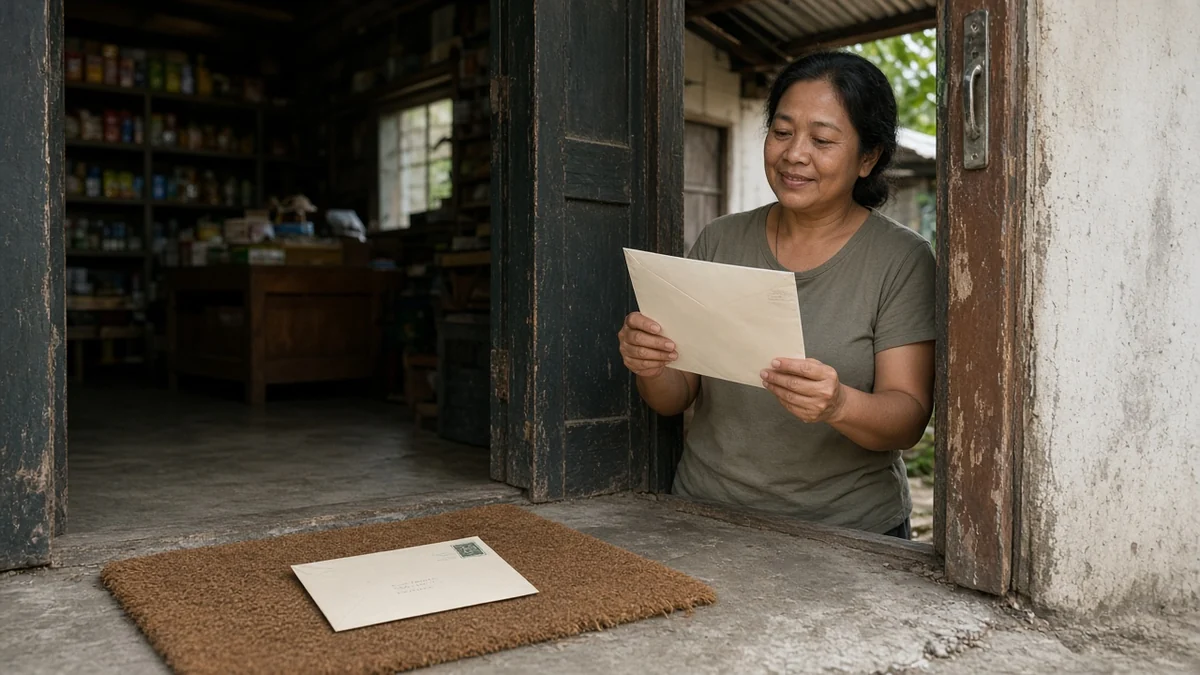
Postcard verification is not available for every business. Google says most codes arrive within 14 days, that codes expire after 30 days, and that requesting a new code invalidates the one already in the mail. The code is five digits. Google says it will never ask you for that code, and you should not share it, including with people who manage the profile.
Those rules are official. The practical problem in the Philippines is delivery, not the PIN format. A listing for a unit on the 18th floor of a Bonifacio Global City tower can have a correct Maps pin and still fail mail because the building admin holds unidentified envelopes, the village guard will not accept a card without a resident name, or the street on the profile is the village name locals use rather than the name on the courier’s route.
We treat postcard as a mail operations job. Confirm the mailing address on screen before you request the code. If customers visit a shopfront but bills go to a different office, say so before anyone clicks request. If the only reliable receiving point is a staffed reception desk, put the recipient name that desk will recognise. Then leave the name, address, and category alone until the code is entered or the 30 days run out.
Do not request a second postcard after a week because “PhilPost is slow.” Google’s own instruction is that a new request cancels the first code. If 14 days have passed and nothing arrived, that is the point to check whether the method is still available and whether the address on the profile is a place a letter can actually land.
Home-based and village addresses cause extra friction. Many subdivisions are known by the village name, while Google Maps and couriers want a street and a house number. We do not claim Google rejects barangay-style addresses as a special Philippine rule. We do say that if the postcard cannot be delivered, the method cannot finish, so the address string has to be one a carrier can use.
Email Verification When The Prompt Appears
Email looks easy and then dies on an address nobody owns. Google’s instruction is to use the email address in the verification screen. That may not be the founder’s personal Gmail, the Info@ mailbox on the website, or the agency login. If the prompt shows an old domain from a previous website, someone has to recover that inbox or the method is useless.
When email is offered, we complete it before chasing video, because it is faster when the inbox is real. Follow the steps in the message Google sends. Do not forward the link into a group chat and lose track of who clicked. After success, add the people who should manage the profile as owners or managers through the normal Google tools, rather than sharing the verification secret itself.
If email is not offered, that is not a bug you can argue away in a comment thread. Use the methods on screen. If none of them can be completed, Google’s Help points you to support and to the community forum. We will help you prepare the listing so the next attempt is not blocked by a wrong category or an unstaffed address, but we cannot create an email option Google did not surface.
Video Recording For Storefront And Service-Area Listings
Video verification is now the method many Philippine profiles see first. Google’s Help article on verifying with a video recording is the official shot list. The video must be an unedited, unique, complete recording with no breaks, at least 30 seconds long, and recorded and uploaded from a mobile device through the Business Profile. Pre-recorded files and offline uploads are not allowed. Do not include bank, tax, or ID numbers, private information, or other people’s faces.
For a storefront or hybrid business, Google wants three proofs. Location: street signs, building numbers, nearby businesses, or familiar places that show you are at the Maps pin. Existence: the storefront, showroom, or permanent signage, with the business name clearly printed on a fixture, matching the name on the profile. Management: access only an employee would have, such as a cash register, kitchen, storage room, or point-of-sale system.
Google is explicit that a business without permanent on-site signage should be listed as a service-area business rather than a storefront. That matters in the Philippines, where a lot of legitimate operators work from a house, a rented desk, or a warehouse with no customer-facing board. Filming a blank gate and calling it a shop is how videos get a Review issues notice.
For a service-area business, Google wants the location where you operate, not empty land. Street signs, landmarks, or neighbourhood markers at the business address are the examples they give. If you run the business from home, they say you can record landmarks and signs in the immediate neighbourhood. Existence is tools, equipment, workspace, business cards, or branded apparel. Management is performing a service, unlocking a branded van, or showing a business permit, invoice, or utility bill that matches the profile name.
Review can take up to 5 business days. If the video is not accepted, Google says they share reasons and you can record a new one after Review issues. We plan the walk before anyone taps record: outside markers first, then the premises or vehicle, then the management proof, in one take, on the phone that is signed into the profile.
Philippine Address Problems That Stall Proof
Verification fails locally for reasons Google’s global Help page will never name. A Makati office might be “Unit 12B, Tower 2” on every invoice and “12th floor, PEZA building” on Facebook. A Cavite warehouse might sit on a road that Maps labels with a barangay, while the DTI papers use a different street. A clinic inside a mall has a shop name the mall directory uses and a legal name the SEC certificate uses.
We do not tell Google that Philippine addressing is a special exemption. We make the public address, the signage, the website, and the papers tell the same story before you record. If the profile name includes a slogan or a city, Google’s representation guidelines already warn against stuffing extra details into the name. That is a global rule, and it is why a video of a sign that says one thing while the listing says another gets rejected.
Mall and condo listings need a pin a customer can walk to. If the business is inside a building with one street number and twenty tenants, the unit and floor belong in the address fields Google provides, not in the business name. If customers cannot visit, do not present it as a storefront just because you rent the space. Hide the address only when you truly do not serve people there, using Google’s own service-area instructions, not as a workaround for a hard pin.
PO boxes, virtual offices that are not staffed during stated hours, and “anywhere in NCR” service claims are eligibility problems, not verification cosmetics. Google’s representation and eligibility guidelines describe who may have a profile. We check that the business makes in-person contact in the way the listing type claims, then we verify. Reversing that order produces a verified listing that later gets restricted.
After You Submit And When Google Asks Again
Google may review the information for up to 5 business days after you complete the steps. Instant verification can happen in cases they list, such as certain Search Console website verifications or bulk verification. Most single Philippine locations should plan for a wait, then confirm in the owner account that Get verified is gone.
If Get verified returns, Google says it could not completely verify the business and you should try again. A Review issues notice after video means the recording was not accepted. Follow the on-screen reasons. If Google asks for more information after you changed details, re-verify rather than opening a second profile. Duplicate listings are a later cleanup problem we would rather not create.
Do not let an agency, a freelancer, or a staff member keep the only login. After the profile is verified, add the people who should manage it as owners or managers, and keep the primary owner in the business. Google’s Help covers adding managers and working with third parties. We can operate a listing for you, but the proof of the business should stay with the business.
How We Work Through A Stuck Listing
We start with the live profile, the methods on screen, and the official Help articles, not with a script. If postcard is offered, we check whether a letter can be received. If video is offered, we match the shot list to storefront, hybrid, or service-area. If the address on the website disagrees with Maps, we fix that before another attempt. Then we line the listing up with local SEO services so categories, NAP, and landing pages are not fighting the pin you just proved.
If the listing is already verified and still invisible, the problem is no longer the PIN. That is pack relevance, proximity, reviews, and the site. If it is not verified, none of those conversations are honest yet.
When you want us to go through the current prompt with you, send the business name and the Maps URL. We will tell you which official method you are looking at, what the Help page requires for that method, and which Philippine address or mail issue is likely to block it. We will not invent a Google rule that is not on Help, and we will not ask you to film a shop you do not have.