Anonymised organic-search case study
How a metal recycler added 4,621 organic clicks
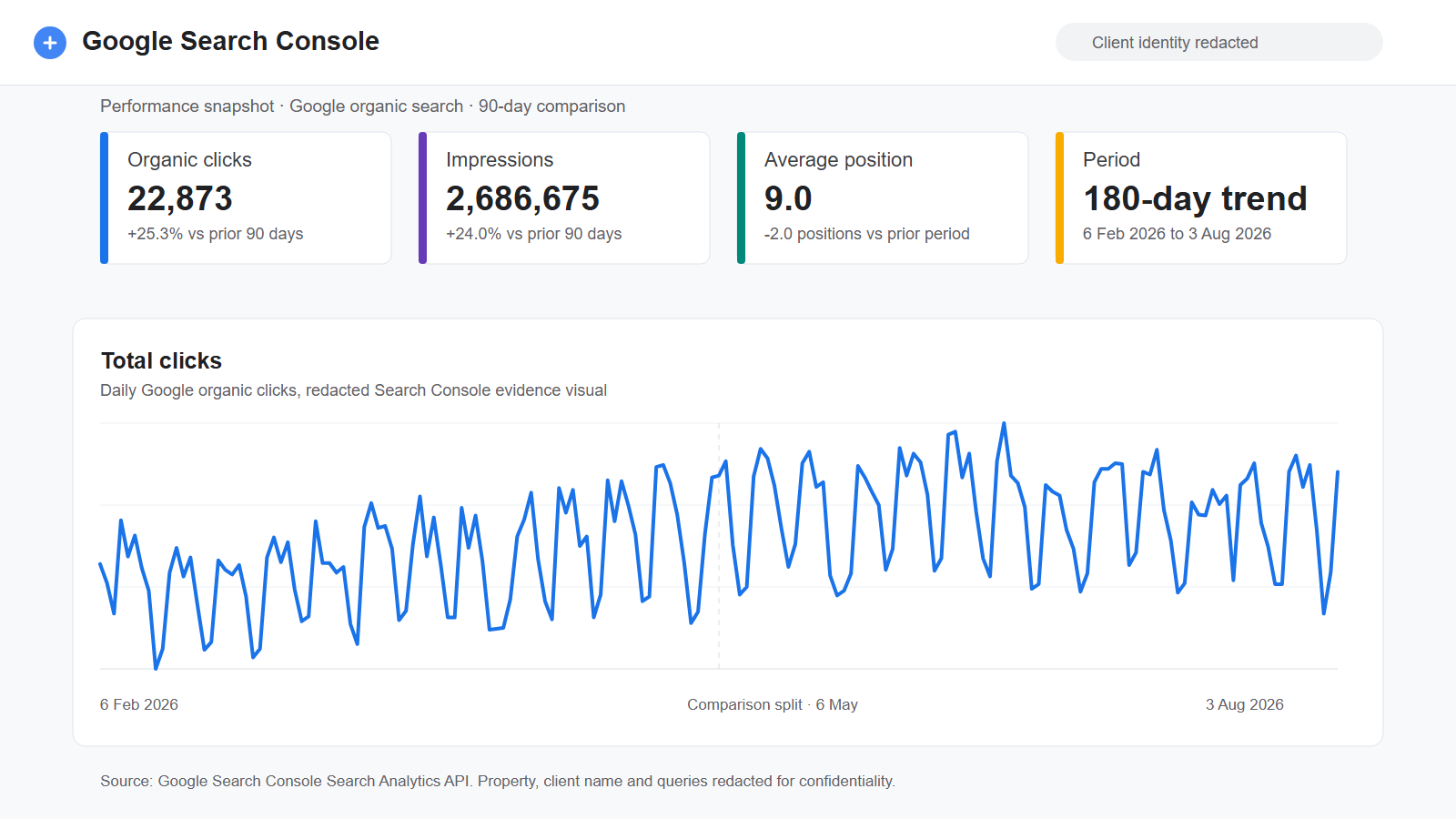
Organic clicks rose from 18,252 to 22,873 in 90 days. Impressions also grew by more than half a million, while average position moved in the other direction. The honest story is growth in search demand coverage, not a simple claim that every ranking improved.

Based in the Philippines.Working across the world.
UK / US / AU
British-led SEO. Clear priorities, experienced people and work you can see.
Explore our workRedacted Search Console evidence
Search reach expanded and organic clicks grew with it
The evidence visual uses redacted Search Console data. It shows a substantial increase in organic clicks alongside a broader pool of impressions, making this a coverage-growth case rather than a narrow single-keyword result.
The search problem
Large, fragmented demand needs coverage across more than one search theme
Recycling demand is rarely expressed through one perfect commercial term. Searchers use material-specific, service-specific and location-led language, and a useful organic footprint needs enough relevant pages to capture that variety.
The public case does not expose the client’s query set. The performance evidence does show that more search exposure converted into more site visits over the selected comparison window.
Reading the result properly
More visibility produced more clicks, but the average-position figure needs context
Clicks increased by 4,621 and impressions increased by 519,291. Click-through rate remained effectively stable, moving from 0.84% to 0.85%. That is consistent with the site reaching a wider pool of searches without losing its ability to earn clicks.
Average position moved from 7.0 to 9.0. That is not presented as a win. It can happen when a site begins appearing for a wider, more competitive query mix. The right next step is to separate high-value pages and query groups rather than relying on one blended average.
- A wider query footprint can add meaningful traffic even when the blended average position becomes less flattering.
- Search Console averages need page and query-level follow-up before they become an SEO diagnosis.
- Traffic growth should be paired with commercial-page and conversion analysis before claiming business impact.
Before and after
90-day Search Console comparison
| Metric | Previous 90 days | Latest 90 days | Readout |
|---|---|---|---|
| Organic clicks | 18,252 | 22,873 | +25.3%, or 4,621 additional clicks |
| Impressions | 2,167,384 | 2,686,675 | +24.0%, or 519,291 additional impressions |
| Average position | 7.0 | 9.0 | Worse by 2.0 positions, requiring query-level review |
| Click-through rate | 0.84% | 0.85% | Broadly stable while coverage expanded |
Evidence boundary
What this case study does and does not prove
This case study uses anonymised Google Search Console data only. It reports Google organic-search performance for two equal 90-day periods and deliberately retains the less favourable average-position movement. Client identity, queries, URLs, revenue and lead data are not published. The result is not a promise of similar performance for another business.
Your next move
Find the search demand already within reach.
We review the pages, query patterns and technical barriers that are holding useful search visibility back.
Let's Talk
Ready to Grow Your Business?
Get a free SEO consultation and discover how we can improve rankings, visibility and the path from search traffic to enquiries. We usually reply within one business day.