Lost Dutchman Leather
Lost Dutchman Leather SEO Case Study
How Lost Dutchman Leather increased organic clicks by 49.3% while average position only moved from 15.2 to 13.8.
Lost Dutchman Leather makes full-grain wallets by hand in Arizona. The useful lesson is stronger snippets and product-page alignment, not one magic keyword. Clicks rose from visibility the shop already had.

Based in the Philippines.Working across the world.
UK / US / AU
British-led SEO. Clear priorities, experienced people and work you can see.
Explore our workThe short version
Better click capture from a competitive ecommerce SERP
The leather wallet market is crowded with marketplaces, established brands and product-led direct competitors. The site already had visibility, but it needed stronger reasons for searchers to click and clearer signals around product quality, material, gift intent and category relevance.
Clicks increased from 15.2k to 22.7k, while impressions only rose from 485k to 500k. That points to a CTR-led improvement, not a huge expansion in reach. The average position improved, but it stayed on page two territory, so the case study needs to be honest about what moved.
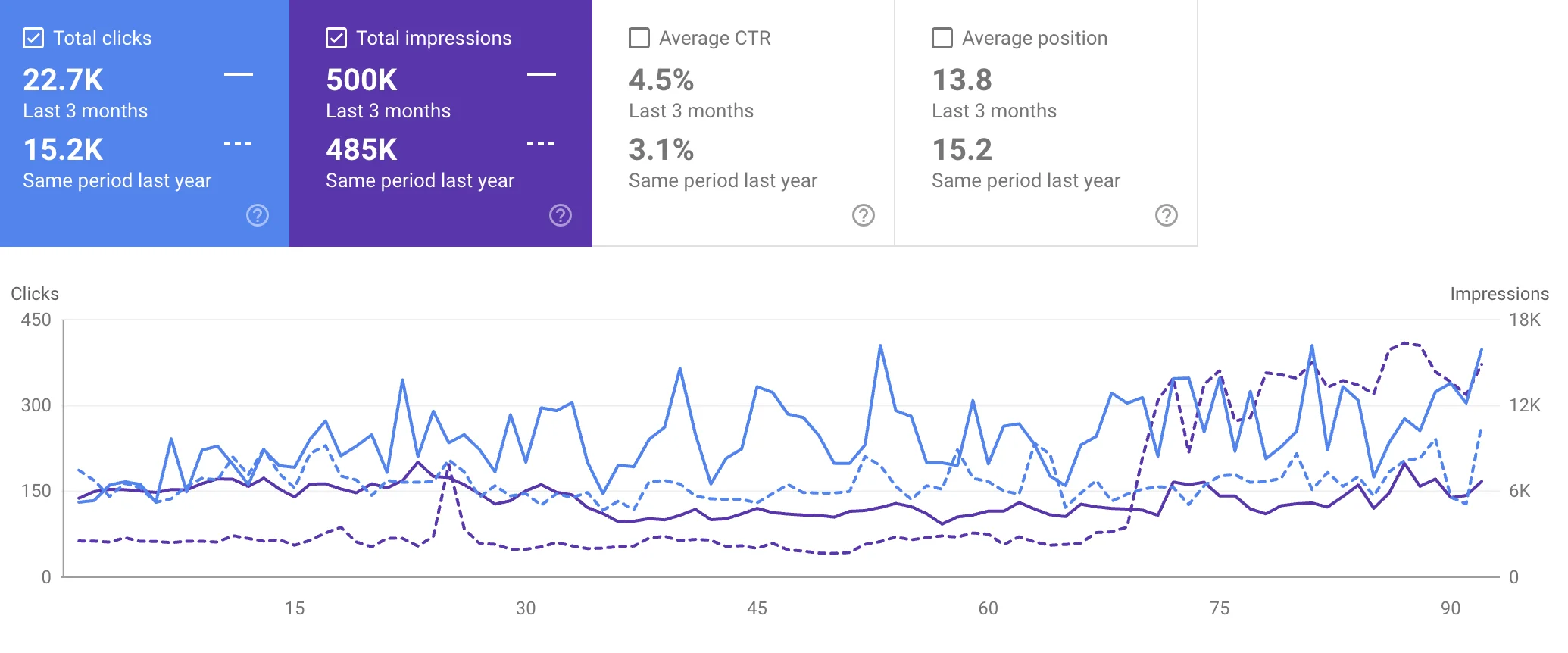
Search Console metrics used in this case study: 15.2k to 22.7k clicks, 485k to 500k impressions, CTR 3.1% to 4.5% and average position 15.2 to 13.8.
Starting problem
The site had visibility, but the SERP message was not doing enough work
A leather wallet buyer may be comparing material, design, delivery, durability, gift suitability and price before clicking. If title tags and descriptions look generic, the page can lose the click even when it appears for a useful query.
The challenge was to improve click capture and product relevance without pretending that the site had suddenly taken over page one. The SEO work needed to sharpen how product and category pages were understood and presented in search.
Constraints
Why this was not a simple SEO win
Crowded ecommerce results
The brand had to compete with marketplaces, retailer category pages and other direct-to-consumer leather goods brands.
CTR was the real lever
Impressions only grew slightly, so the main opportunity was converting existing visibility into more visits.
Product intent varied
Searchers used style, material, gift and quality language, not one neat keyword cluster.
Ranking movement was modest
Average position improved from 15.2 to 13.8, which is useful but still not a first-page dominance story.
What changed
The work focused on search snippets, product relevance and ecommerce page quality
Snippet and title testing
We tightened titles and meta descriptions around leather quality, wallet style, gift intent and clearer commercial hooks.
Product and category alignment
Priority pages were reviewed for headings, product language, descriptive copy and search intent match.
Internal link improvement
Supporting pages and category paths were used to reinforce the products and collections most likely to earn commercial clicks.
Structured ecommerce signals
Product and category signals were checked so search engines could better understand what each page offered.
Search Console monitoring
The campaign was judged from query, page and CTR movement, not from a fixed list of generic ecommerce tasks.
What moved
Clicks rose faster than impressions, which makes CTR the important story
Organic clicks+49.3%
Before15.2k
After22.7k
The site earned 7.5k more clicks during the comparison period.
Impressions+3.1%
Before485k
After500k
Visibility expanded only slightly, so this was not mainly a reach story.
Average CTR+1.4pp
Before3.1%
After4.5%
The stronger snippet and page alignment helped turn existing impressions into more traffic.
Average positionModest lift
Before15.2
After13.8
The average ranking improved, but the portfolio still sat mostly beyond the first page.
Commercial meaning
The useful win was more qualified visits from the same search market
A CTR-led improvement can be commercially valuable for ecommerce because it increases the number of shoppers reaching product and category pages without needing the whole keyword set to jump to the top three.
The next phase should still focus on first-page movement, authority and stronger category depth. The 49.3% click lift is useful proof, but not a reason to stop improving the ranking base.
What matters here
This case supports ecommerce, on-page and content SEO conversations where the site has visibility but weak snippet appeal or unclear product-page relevance.
Lessons
What ecommerce brands should take from this
CTR gains need context. A higher click-through rate matters most when the traffic lands on pages that can sell or move users to the next step.
Product SEO is not just writing descriptions. Page structure, snippet language, internal links and commercial proof all affect how the page performs.
Second-page improvements are useful, but they should be framed honestly. The next commercial upside usually comes from pushing the strongest pages onto page one.
Search Console can show whether the issue is visibility, CTR, ranking depth or page mismatch. Each problem needs a different fix.
FAQ
Questions this case study should answer
What was the main result in this leather wallet SEO case study?
Organic clicks increased from 15.2k to 22.7k, a 49.3% lift. CTR also improved from 3.1% to 4.5%, while impressions rose only slightly.
Was this mainly a ranking improvement?
Not mainly. Average position improved from 15.2 to 13.8, but the strongest story is better click capture from existing visibility rather than a dramatic ranking jump.
What SEO work helped the ecommerce pages perform better?
The work focused on snippets, page relevance, product and category language, internal links, ecommerce signals and Search Console monitoring.
Why does CTR matter for ecommerce SEO?
If a page already appears for useful searches, a better title, description and page match can bring more qualified shoppers to the site without waiting for every ranking to move.
Can this approach work for other ecommerce stores?
Yes, when the store already has visibility or useful product demand. The exact plan should still begin with a crawl, keyword mapping and Search Console review.
Does Bright Forge guarantee the same ecommerce SEO result?
No. Results depend on the market, site quality, product demand, competition and implementation. Case studies show the kind of thinking involved, not a guaranteed outcome.
Want to know what is holding your search traffic back?
We can review the pages, queries and technical signals that matter before recommending any rewrite, content plan or link activity.