Emily Bridalwear
Emily Bridalwear SEO Case Study
How Emily Bridalwear grew organic clicks by 137.5% across commercial dress-research searches.
Emily Bridalwear is a Sheffield bridal shop. Live site: emilybridalwear.co.uk. Bridal search is image-led and mixed-intent. The useful result was a move from weak page-three visibility toward stronger page-two coverage, plus broader impression growth. Not a claim of instant first-page control.

Based in the Philippines.Working across the world.
UK / US / AU
British-led SEO. Clear priorities, experienced people and work you can see.
Explore our workThe short version
Better visibility during the bridal research window
A bridal dress designer had useful products and strong visual appeal, but organic visibility was stuck too far down the results for many valuable searches. Average position sat at 24.8, which meant the site was often appearing where searchers rarely reach.
Over the comparison period, organic clicks increased from 7.4k to 17.6k and impressions increased from 342k to 746k. Average position improved to 14.9. That is a meaningful visibility gain, but it should be read honestly: the site moved much closer to first-page competition, not all the way through it.
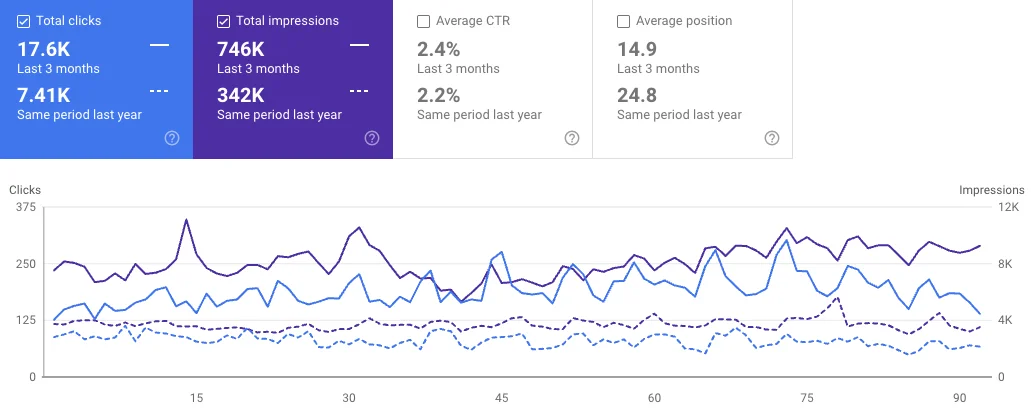
Search Console metrics used in this case study: 7.4k to 17.6k clicks, 342k to 746k impressions, average position 24.8 to 14.9 and CTR 2.2% to 2.4%.
Starting problem
The site had bridal demand, but too much of it was being reached from weak positions
Bridal dress SEO has a difficult mix of intent. Some searches are early inspiration. Some are style research. Some come from shoppers comparing designers, boutiques or appointment options. Treating all of those searches as the same opportunity leads to vague pages and wasted effort.
The starting data showed a site with visibility, but not enough strength in the results. The work had to make page purpose clearer, improve coverage around bridal dress searches and support image-heavy pages with stronger crawlable context.
Constraints
Why bridal SEO needs more than pretty pages and generic content
Mixed buyer intent
Brides search across inspiration, dress styles, designers, prices, locations and appointment intent. The page strategy had to respect those differences.
Image-heavy pages
Strong photography helps users, but search engines still need useful text, alt context, fast loading and clear page structure.
Competitive commercial terms
Established retailers, marketplaces and publishers compete for many bridal searches, so relevance and authority had to build together.
Short comparison window
The three-month improvement was strong, but the page still needed honest framing because average position ended at 14.9, not page-one dominance.
What changed
The work focused on commercial relevance, visual-page quality and cleaner query coverage
For a bridal designer, the search opportunity sits across dress styles, collections, designer language, appointment intent and research questions. The campaign aimed to make the right pages easier to understand and easier to find.
Commercial intent mapping
We separated broad inspiration searches from stronger buying-intent phrases around bridal dress styles, designer language, custom options and retailer comparison intent.
Page relevance improvements
Priority pages needed clearer titles, headings, copy and internal links so Google could understand which pages matched dress style, designer and purchase-stage searches.
Gallery and image SEO checks
Bridal sites are image heavy. We reviewed how dress imagery, filenames, alt text, speed and page presentation supported search visibility without turning the pages into thin image galleries.
Structured data and page trust signals
The campaign strengthened page-level signals around products, collections and brand credibility so the site gave search engines more useful context about the dresses and business.
Long-tail content and internal linking
We used Search Console and keyword data to guide supporting content and internal links around dress styles, buyer questions and collection pages rather than publishing generic wedding content.
What moved
Clicks and impressions grew sharply while average position moved from page three toward page two
The strongest movement was the almost ten-place average position improvement. That helped the site appear in more useful places across more searches, which explains why clicks rose faster than CTR.
Organic clicks +137.5%
Before7.4k
After17.6k
More visits from people searching during the bridal research and dress selection journey.
Impressions +118.1%
Before342k
After746k
The site appeared across a much wider set of dress style, designer and buying-intent searches.
Average position 10 place lift
Before24.8
After14.9
A meaningful move from weak page-three visibility toward stronger page-two coverage, not a first-page claim.
CTR +0.2pp
Before2.2%
After2.4%
CTR improved slightly while impressions more than doubled, so the click growth came mainly from wider visibility.
Commercial meaning
The result gave the brand more chances to be found during dress research
Bridal purchases are high-consideration decisions. Searchers compare styles, designers, locations, galleries and appointment options before they commit. More visibility during that research window gives the brand more chances to be shortlisted.
The data does not prove revenue and it should not be dressed up as if it does. What it does show is stronger organic reach, more visits and a better position from which to compete for first-page terms in the next phase.
Lessons for similar businesses
What bridal and fashion ecommerce brands should take from this
Bridal SEO needs to separate inspiration traffic from commercial research. Both can matter, but they do not deserve the same pages or the same success metrics.
A move from average position 24.8 to 14.9 is commercially useful, but it is not a first-page win. The stronger story is improved reach and a better base for the next phase.
Click growth can outpace CTR movement when a site starts appearing across many more relevant searches. That is still valuable if the new visibility fits real dress research and buying behaviour.
Image-led ecommerce pages need more than attractive photography. Search engines still need crawlable context, useful copy, internal links and clear page purpose.
Questions this case study should answer
Bridal dress SEO case study FAQs
Useful case studies should explain the work, the limits and the meaning behind the metrics.
What changed in this bridal dress SEO campaign?
The work focused on improving page relevance, query coverage, image-led page quality, internal linking and structured signals around bridal dress searches. The result was stronger visibility across commercial research terms, with clicks rising from 7.4k to 17.6k.
Why did clicks grow so much in three months?
Clicks grew because impressions more than doubled and average position improved by almost ten places. CTR only moved from 2.2% to 2.4%, so the main gain came from broader visibility and better rankings across more relevant searches.
Is moving from position 24.8 to 14.9 enough to matter?
Yes, when the query set is commercially relevant. It moved the site from weak page-three visibility toward stronger page-two coverage. That is not the same as owning first page rankings, but it creates more search exposure and a better platform for future gains.
What SEO work matters most for bridal retailers and designers?
Bridal SEO usually needs strong collection pages, clear dress style coverage, useful buyer guidance, optimised imagery, structured data, internal links and page copy that matches how brides research before booking or buying.
Should bridal brands focus on blogs or commercial pages first?
Commercial pages should usually come first. Blog and guide content can support the journey, but dress collections, designer pages, appointment pages and high-intent buying pages normally carry the clearest business value.
Does Bright Forge guarantee the same result for other bridal brands?
No. Results depend on the market, starting position, site quality, product range, competition and how much can be improved. This case study shows the type of diagnostic work and SEO thinking involved, not a guaranteed outcome.
Selling products where visuals and search intent both matter?
We can inspect the pages, queries and technical signals limiting organic growth.
If your ecommerce or appointment-led site has strong products but uneven search visibility, start with a focused SEO review. We will look at Search Console data, page relevance, crawlability, image-led page quality and the work most likely to move the campaign forward.
Let's Talk
Ready to Grow Your Business?
Get a free SEO consultation and discover how we can improve rankings, visibility and the path from search traffic to enquiries. We usually reply within one business day.